Plain-English guide · Regulated by IFSCA
GIFT City Funds, Explained Simply
An educational resource to understand GIFT City Mutual Funds, Alternative Investment Funds (AIFs), and the IFSC investment ecosystem for NRIs, OCIs and Resident Indians.

Find your starting point in three clicks
- 1Who are you?
- 2What do you want to do?
- 3Where to start
Start from USD 500. Some GIFT City retail funds now have low minimums. For example, Tata India Dynamic Equity Fund (GIFT City) accepts USD 500 from NRIs, OCIs and foreign investors; it is not open to Indian residents or US persons. Source: Tata Mutual Fund. An example of a minimum, not a recommendation; read the scheme documents.
The process
How Investing Works, in Five Steps
The same path most NRI, OCI and Resident Indian investors follow.
- 1
Understand the structures
Mutual Fund FoFs, Retail Feeder Funds, AIFs and PMS — and their minimums.
Funds Explained - 2
Check your eligibility & route
NRI, OCI or Resident Indian — and if US-based, PFIC status first.
Who It's For - 3
Gather your documents
Passport, PAN, overseas address proof, tax residency certificate.
- 4
Ask your questions
Ask Anup how the process works, or to be connected with a Fund Management Entity.
Contact Anup - 5
Complete onboarding and invest
KYC with the FME, sign subscription documents, remit USD, receive units.
Two tiers of GIFT City products
Retail funds start from about USD 500. PMS and AIFs start at USD 75,000 and USD 150,000 and are built for high-net-worth investors, families and institutions. Know which tier you are looking at before you compare.
Retail tier
Small to moderate amounts, for individual investors
High-ticket tier
USD 75,000 and above, for HNIs, families and institutions
Where your money goes when you invest through GIFT City
GIFT City funds run in two directions. NRIs use them to invest in India in dollars; resident Indians use them to invest abroad. See which fund houses run them.
Work it out in under a minute
Which route applies to me?
Resident, NRI, OCI or returning: see your route, limits and tax collected at source.
TCS calculator
Estimate TCS on any LRS remittance for FY 2026-27, including GIFT City investments.
GIFT City fund list
Fund houses with GIFT City funds, inbound and outbound, with official sources.
Glossary
IFSC, IFSCA, FME, LRS, PFIC and more, explained in a line each.
Why Start Here
Regulated by IFSCA
GIFT City funds operate under India's International Financial Services Centres Authority — a single regulator built specifically for this jurisdiction, distinct from SEBI's oversight of the rest of India's mutual fund industry.
Not run by a fund house
This isn't an AMC's own website, and it isn't built to promote one scheme. It explains the GIFT City fund structures so you can compare them before you commit to anything.
One point of contact
Questions go directly to Anup Vatyani — no call centre, no relationship-manager rotation, no hand-offs between departments.
What Is GIFT City?
GIFT City — short for Gujarat International Finance Tec-City — is India's first International Financial Services Centre (IFSC): a purpose-built jurisdiction where funds can be bought and sold in US Dollars, regulated separately from the rest of India's financial system. That single fact is what makes a GIFT City fund structurally different from a mutual fund you might already hold through a regular Indian demat account.
Understand GIFT City in fullWhy These Funds Exist
Invest in global currency
Contributions and redemptions happen in US Dollars, so currency risk and conversion costs work differently than a typical NRI remittance through the NRE/NRO route.
A separate regulator
The International Financial Services Centres Authority (IFSCA) — not SEBI alone — oversees GIFT City funds, with its own rules on structure, disclosure and investor eligibility.
Built for global portfolios
These structures are designed to hold international assets and route capital across borders in ways a typical onshore Indian mutual fund cannot.
How GIFT City Funds Are Structured
Not every GIFT City fund works the same way. Four broad structures cover most of what's available:
Mutual Fund FoF
A feeder fund that channels your money into an underlying scheme; typically the lowest entry ticket of the four.
AIF (Alternative Investment Fund)
A pooled vehicle for less standardised strategies; typically the highest entry ticket.
PMS (Portfolio Management Services)
A professionally managed, individually held portfolio for investors wanting more customisation.
Retail Feeder Fund
A lower-ticket fund built for simple, individual access.
Who Actually Invests in These Funds?
NRI
Send money in USD, invest in USD, redeem in USD — a more direct route than the LRS remittance most NRIs default to.
OCI
Broadly similar access to NRIs, with a few fund-specific eligibility conditions worth checking upfront.
Resident Indian
You can invest too, via the Liberalised Remittance Scheme (LRS), subject to its own annual limit and tax treatment.
Living outside India? Whether a fund accepts you, and how it is taxed, depends on your country: the UAE and Gulf, UK, US (PFIC rules), Canada, Singapore or Australia. See the NRI guide, country by country
Advantages of GIFT City Funds for NRIs
GIFT City provides NRIs with a globally aligned investment ecosystem, offering access to professionally managed investment products through India's International Financial Services Centre (IFSC). It combines international standards, regulatory oversight, and a wider range of investment opportunities in one place.
Key Benefits
- ◆Invest in USD and other permitted foreign currencies (subject to fund structure)
- ◆Access India and global investment opportunities
- ◆Regulated by IFSCA, India's unified IFSC regulator
- ◆Professionally managed investment products
- ◆Potential tax-efficient investment structures
- ◆Diversified options across Mutual Funds, AIFs, REITs, InvITs and more
Investing Through Traditional Route vs GIFT City
| Feature | Traditional Investment Route | GIFT City Investment |
|---|---|---|
| Investment Currency | Primarily INR | USD and other permitted foreign currencies* |
| Investment Opportunities | Primarily India-focused | India-focused and global investment opportunities |
| Investment Products | Mutual Funds, Stocks, Fixed Income | Mutual Funds, AIFs, REITs, InvITs, Feeder Funds & Fund of Funds |
| Regulatory Framework | Multiple regulations (RBI, FEMA, SEBI, etc.) | Unified IFSC ecosystem regulated by IFSCA |
| Global Market Access | Limited | Easier access through internationally structured funds |
| Portfolio Diversification | Primarily domestic investments | Diversified exposure across India and global markets |
| Tax Efficiency | Standard tax provisions | Potential tax-efficient structures for eligible IFSC investments* |
| Investment Experience | Multiple processes and intermediaries | Streamlined cross-border investment experience |
Investment Currency
Traditional RoutePrimarily INR
GIFT CityUSD and other permitted foreign currencies*
Investment Opportunities
Traditional RoutePrimarily India-focused
GIFT CityIndia-focused and global investment opportunities
Investment Products
Traditional RouteMutual Funds, Stocks, Fixed Income
GIFT CityMutual Funds, AIFs, REITs, InvITs, Feeder Funds & Fund of Funds
Regulatory Framework
Traditional RouteMultiple regulations (RBI, FEMA, SEBI, etc.)
GIFT CityUnified IFSC ecosystem regulated by IFSCA
Global Market Access
Traditional RouteLimited
GIFT CityEasier access through internationally structured funds
Portfolio Diversification
Traditional RoutePrimarily domestic investments
GIFT CityDiversified exposure across India and global markets
Tax Efficiency
Traditional RouteStandard tax provisions
GIFT CityPotential tax-efficient structures for eligible IFSC investments*
Investment Experience
Traditional RouteMultiple processes and intermediaries
GIFT CityStreamlined cross-border investment experience
*Investment features, currency options, and tax benefits vary depending on the specific fund structure, applicable regulations, and the investor's country of residence.
These features come with risks, including market risk, currency risk and exit restrictions. Returns are not guaranteed. Read the risks of GIFT City funds and how they compare with regular Indian mutual funds.
How Anup Can Help
I'm Anup Vatyani, an AMFI-registered Mutual Fund Distributor (ARN 106715) with over 22 years in banking and financial services, including a decade dedicated to mutual fund distribution. My role on this site — and in any conversation that follows — is to help you understand how GIFT City funds work, not to push a specific product or give personalised investment advice. If, after reading through this, you'd like to talk it through, I'm one message away.
Talk to AnupFrequently Asked
- Is a GIFT City fund the same as a regular Indian mutual fund?
- Do I need a PAN card to invest?
- How is a GIFT City fund taxed for a US-based NRI?
- Who regulates GIFT City funds?
About the Contributor
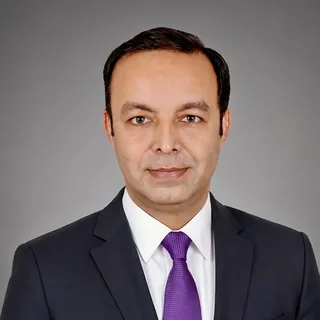
Anup Vatyani has over 22 years of experience in banking and financial services, including a decade as an AMFI-registered Mutual Fund Distributor (ARN 106715). This site is his effort to provide an accurate, educational resource on GIFT City and IFSC investing.
Read Anup's full backgroundGIFT City funds: quick answers
What investment opportunities are there in GIFT City?
What is GiftCityFunds?
What are GIFT City mutual funds?
Are GIFT City funds USD funds?
Still have questions about GIFT City funds?
That's a fair place to be. Ask Anup anything — no forms that go to a call centre, no pressure, and no obligation to invest.